
So often we assume that if something doesn’t work quickly, it doesn’t work at all.
Most of us don’t set out trying to make ourselves sick.
In fact, many of the people I talk to are doing the exact opposite. They’re reading books, listening to podcasts, buying organic foods, cooking at home, exercising, and genuinely trying to take care of themselves. That’s one of the reasons I wanted to share Tzivi’s story this week.
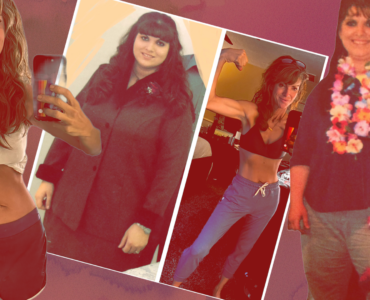
She told me about spending years becoming known as the person who could make vegetables taste wonderful. Friends asked her to teach healthy cooking. She could hide vegetables in just about anything. She believed deeply that she was nourishing herself and her family, and she put an incredible amount of time and effort into doing it well.
Yet somewhere along the way, her body began telling a different story.
By the time she was thirty, she had already been diagnosed with arthritis. As the years passed, she accumulated more diagnoses, more pain, and more frustration. Her weight continued climbing despite all of her efforts, and there came a point where bending over to pick something up from the floor left her unable to stand back up without help. She wasn’t looking for an easy answer. She was simply trying to understand why someone working so hard at being healthy seemed to be getting less healthy.
I think that’s a place many people find themselves. It certainly isn’t unique to carnivore. Whether it’s arthritis, digestive issues, weight struggles, migraines, autoimmune disease, or simply feeling exhausted all the time, it’s discouraging when you’re doing everything you’ve been told to do and the results keep moving in the wrong direction.
The Problem With Assuming Everyone Is the Same
One thing I appreciated about talking with Tzivi is that she wasn’t trying to convince anyone she’d found the perfect diet. If anything, her story was one long series of experiments.
She tried Atkins years ago, long before people commonly talked about keto flu, and felt terrible. She removed sugar. She learned about nightshade vegetables and noticed they made a difference. She experimented with paleo, then keto, and eventually carnivore. Some things helped. Some things didn’t. Some improvements lasted for a while before she realized she still wasn’t where she wanted to be.
That’s much closer to what real life looks like than the tidy success stories we sometimes hear.
Health isn’t usually one dramatic moment where everything changes forever. It’s often a process of paying attention, making adjustments, learning something new, and then making another adjustment. I sometimes joke that I want all of us to become “happy little scientists,” but I really mean it. The goal isn’t to defend a particular way of eating. The goal is to learn what allows your own body to function well.
That requires honesty more than certainty.
Your Body Gets a Vote
One of the themes that kept coming up during our conversation was the difference between what sounds healthy and what actually produces good results.
Tzivi wasn’t eating processed junk food all day. She wasn’t living on soda and candy bars. She was eating vegetables, fruits, whole grains, and carefully prepared homemade meals because that’s what she believed would help her heal. When those foods didn’t bring the results she expected, she kept searching.
Eventually, she found herself eating fewer and fewer plant foods, not because someone convinced her she should, but because her own body kept responding positively whenever she removed another source of irritation.
One of the most surprising moments in her story came after switching from keto to carnivore. After years of waking every night drenched in sweat and making repeated trips to the bathroom throughout the night, she slept through until morning within the first twenty-four hours. The night sweats disappeared immediately.
Not every improvement happened that quickly. Her arthritis improved over time. Fibromyalgia pain gradually eased. Lipedema pain disappeared. More recently, changing to higher-quality grass-finished meat seems to have helped eliminate the last of her hot flashes.
That timeline is worth paying attention to.
Some changes happen overnight. Others take months. Still others continue unfolding years later. I think we get ourselves into trouble when we assume every improvement should happen on the same schedule.
Keep Looking for the Next Piece
Something else I admire about Tzivi is that she didn’t stop asking questions once she felt better.
Three years into carnivore, she’s still experimenting. She has tried removing sweeteners. She’s paying attention to different cuts and qualities of meat. She’s looking honestly at what helps and what doesn’t.
I smiled when she admitted that, years ago, she watched one of my videos and decided I had completely lost my mind. I was standing there happily eating burger patties while everyone else around me was enjoying dessert, and she thought, “That woman cannot possibly be happy.”
Honestly, I understand why she thought that.
From the outside, carnivore can look like deprivation. It can seem impossible that someone would willingly give up foods they once loved. But one of the things I see over and over again is that when people become well nourished and the constant cravings quiet down, something unexpected happens. They stop negotiating with food all day long. They stop feeling like they’re missing out. They stop thinking about what they can’t have because they’re finally satisfied by what they do have.
That kind of freedom is difficult to explain to someone who hasn’t experienced it yet.
Community is important
One thing this conversation reminded me is how valuable it is to have people around you who are willing to troubleshoot alongside you.
Tzivi talked about struggling with constipation when everyone else seemed to be talking about diarrhea. She kept asking questions until she found things that helped. Later, as new questions came up, she kept learning.
That’s exactly how our coaching groups work. Every month people come in with different goals, different backgrounds, and different obstacles. One person is trying to break free from sugar. Another is navigating menopause. Someone else is trying to understand why they’re still dealing with joint pain or digestive issues. We don’t pretend everyone’s experience will be identical because it won’t be.
What we can do is work through those questions together. We can share ideas, compare notes, encourage one another, and keep looking for practical solutions instead of giving up.
For me, that’s one of the best parts of this community. Yes, we talk about meat. We talk about weight loss. We talk about cravings and recipes and fat and protein. But underneath all of that, we’re helping people build lives where food isn’t running the show anymore. That’s a pretty wonderful place to end up.

Find your tribe.
If you’d like some support along the way, that’s exactly why My Zero Carb Life coaching exists. We work through the practical questions together, troubleshoot the bumps in the road, and encourage one another as we build lasting habits. You’ll find a community of people who truly understand food addiction, cravings, and the freedom that comes from leaving them behind.



So encouraging! I’ve been listening continuously for weeks as I get myself re-keto adapted and prepare for full carnivore elimination to see if can nail my colitis- i too really struggle with giving up the vegetables again – it’s inspired me to reconsider joining the group- I really need to do it 100% this time for health and think I’m going to need some like minded folk to help out with this part. Thank you for sharing – looking forward to part 2 🙂