So often we assume that if something doesn’t work quickly, it doesn’t work at all.
Most of us have spent years bouncing from one nutrition plan to the next, collecting enough disappointing experiences that it’s easy to become convinced we’ve simply “tried everything.” But sometimes what we’ve really done is give up before our bodies had the chance to catch up.
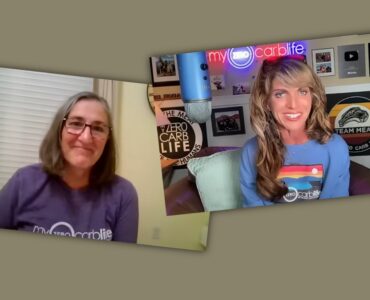
That’s one of the themes that kept coming up as I talked with Adi and Tzivi from Israel. Adi’s story isn’t about discovering a miracle diet that fixed everything overnight. It’s about decades of searching, learning, adjusting, and finally finding a way of eating that addressed problems she had been living with for most of her adult life. Her experience is also a reminder that healing isn’t always linear—and that persistence often matters just as much as finding the right approach.
Doing Everything “Right” and Still Feeling Terrible
Listening to Adi describe her early years, I couldn’t help but smile because she recognized things as a child that only made sense much later. While everyone else wanted birthday cake frosting, she peeled it off because the sweetness made her feel awful. She naturally preferred meat over desserts and noticed that even foods everyone considered healthy, like apples, often didn’t sit well with her. At the time, those experiences didn’t seem significant. They were simply part of who she was.
As an adult, she became exactly the kind of person many of us have tried to be. She learned about nutrition, cooked beautiful meals filled with vegetables, and was even invited to speak to groups of young mothers about healthy eating. From the outside, it looked like she was doing everything right. Yet after six pregnancies, chronic weight gain, arthritis at thirty years old, and increasing joint pain, her health continued to decline despite all of her efforts.
I hear versions of this story every week. The people who join my coaching groups usually aren’t coming because they haven’t tried hard enough. They’re coming because they’ve tried incredibly hard, followed the advice they were given, and still don’t feel well.
Sometimes the Puzzle Takes Years to Assemble
Adi didn’t stop looking for answers after her arthritis diagnosis. She tried Atkins, cut out sugar, eliminated dairy, removed nightshades, experimented with paleo, completed juice fasts, and eventually found keto. Every change taught her something, but none of them completely solved the problems she was trying to fix.
One of my favorite moments in our conversation came when she admitted what she thought the first time she watched one of my videos. She heard me talking about happily eating burger patties while everyone else was having dessert and concluded that I must be completely crazy. Apparently, no reasonable person could actually enjoy eating that way.
I told her I’d heard worse.
She stayed with keto for several years before finally trying carnivore. Even then, it wasn’t smooth sailing. She struggled with constipation, couldn’t find anyone talking about that particular issue, and decided carnivore simply wasn’t right for her. Looking back now, she realizes she didn’t yet have the information she needed to troubleshoot the problem. That doesn’t mean her first attempt was a failure. It was simply one more piece of information she would eventually use later.
Healing Doesn’t Always Look the Way We Expect
After several more years of frustration, Adi reached a point where she had to make a decision. She realized that continuing down the same path wasn’t giving her the life she wanted or the health she needed to keep up with her family. She returned to keto first, then gradually committed to carnivore, letting go of sweeteners and even the vegetables she genuinely loved cooking.
One of the things that struck me most was how quickly some of her symptoms changed once she made that transition. She had spent nearly eight years waking up drenched in sweat every night and getting up every couple of hours to use the bathroom. Within a day of switching from keto to carnivore, she slept through the night without night sweats for the first time in years.
Now, I never tell people to expect that kind of timeline. Bodies are wonderfully different, and I think it’s important to be honest about that. Some people notice changes quickly, while others need months before they begin to see meaningful improvement. But when someone consistently tells me their body feels dramatically better after removing foods that weren’t serving them, I pay attention. Those experiences may not be universal, but they are certainly worth listening to.
More Food Isn’t Always the Wrong Answer
Later in our conversation, Adi shared another lesson that I see surprisingly often, especially among women who have spent years dieting. After joining my coaching groups, she watched my old “Uno the Undereater” video and immediately recognized herself. Like many people, she assumed that because she wanted to lose weight, eating less had to be the answer.
Instead, she discovered she wasn’t eating enough.
She began tracking her food, slowly increased her calories to maintenance, stayed there long enough for her body to stabilize, and only then made a modest calorie reduction. Her weight-loss stall finally broke. To someone hearing that for the first time, it probably sounds completely backwards. But years of chronic dieting, stress, menopause, and under-eating can leave the body in a very different place than most people realize.
That’s one of the reasons I encourage people to collect data before assuming they know what’s happening. Tracking isn’t something everyone needs forever, but it can be an incredibly useful troubleshooting tool when progress stalls and you’re not sure why.
Curiosity Will Take You Further Than Discouragement
Adi also talked about developing gout symptoms shortly after returning to strict carnivore. Her doctor immediately advised her to avoid red meat and prescribed medication instead. She chose to stay the course, and within a few weeks her symptoms disappeared. During our conversation, I shared a similar story about a butcher I knew whose chronic gout also resolved after switching to carnivore despite being told to avoid red meat.
That doesn’t mean everyone’s experience will be identical, and it certainly doesn’t mean we should ignore medical advice. What it does remind us is that nutrition is often far more individual than we’d like it to be. Sometimes the most helpful thing we can do is remain curious, pay attention to our own results, and be willing to question assumptions when our bodies tell us something different.
If there’s one thing I hope people take away from Adi and Tzivi’s conversation, it’s that lasting health rarely comes from finding the next perfect diet. More often, it comes from patiently learning your own body, making thoughtful adjustments, and resisting the urge to quit every time progress slows. Those small decisions, repeated consistently, tend to add up to something much bigger than we expected.

Find your tribe.
If you’d like some support along the way, that’s exactly why My Zero Carb Life coaching exists. We work through the practical questions together, troubleshoot the bumps in the road, and encourage one another as we build lasting habits. You’ll find a community of people who truly understand food addiction, cravings, and the freedom that comes from leaving them behind.